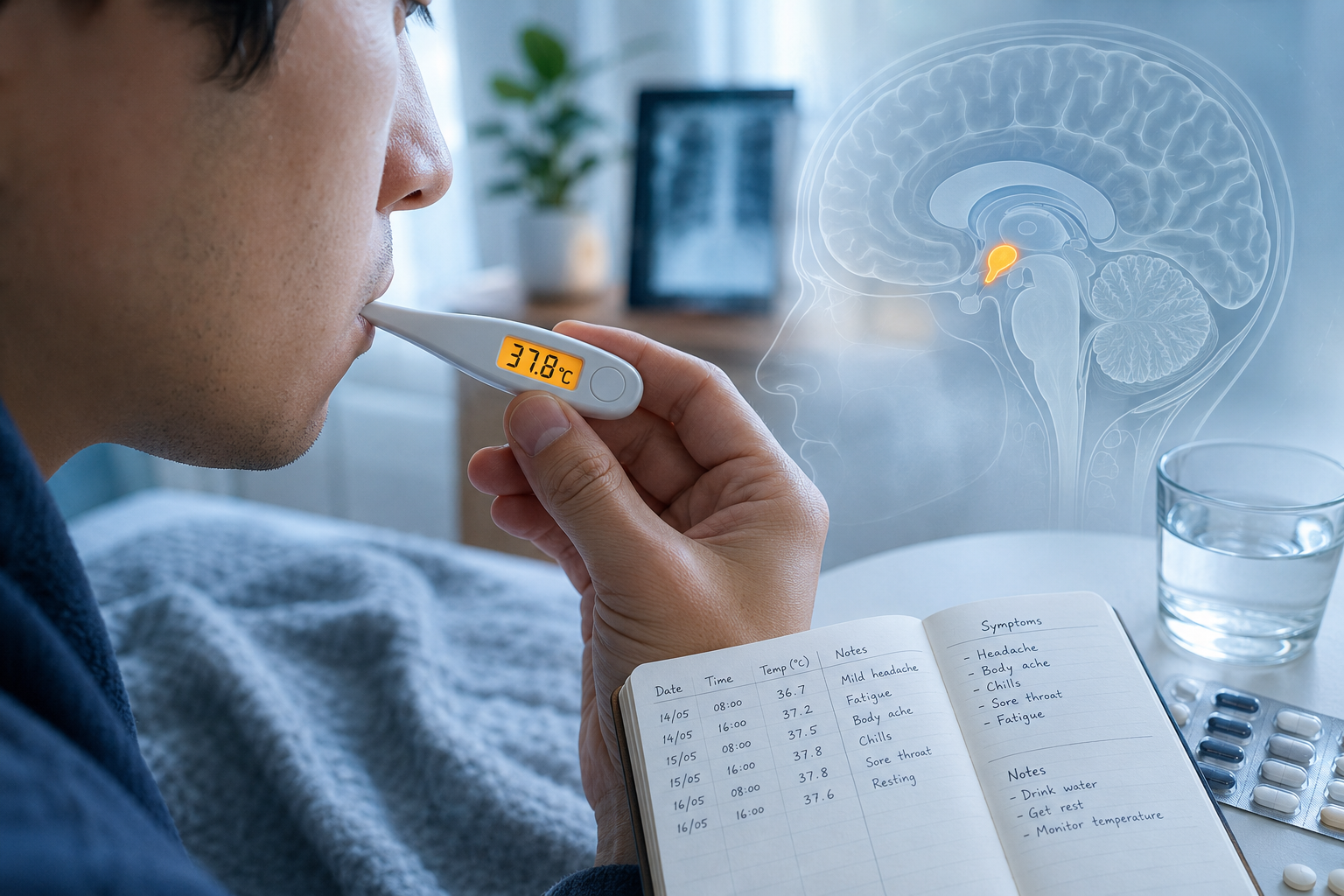
"It's just a mild fever — it'll pass." Sound familiar? Many of us brush off a low-grade temperature without a second thought. But your body rarely raises its own temperature for no reason. Here's what you need to know.
What exactly is a low-grade fever?
A normal body temperature sits around 37°C (98.6°F), though this varies slightly by person, time of day, and how it's measured. A low-grade fever is generally defined as a temperature between 37.3°C and 38.3°C (99.1°F to 100.9°F). Anything above 38.3°C is considered a proper fever.
The distinction matters because a persistent low-grade fever — one that lingers for more than two to three weeks — can sometimes point to an underlying condition that deserves attention.
[Did you know? Fever itself is not a disease — it's a defense response. When your immune system detects an invader, it releases proteins called pyrogens that signal the hypothalamus (your brain's thermostat) to raise your body temperature, making the environment less friendly for pathogens.]
Common causes patients often overlook
Most people associate fever with colds and flu, which is correct — but those are usually short-lived. A low-grade fever that lingers can stem from a wider range of causes:
Possible causes to discuss with your doctor
- Viral or bacterial infections — including urinary tract infections, which can be subtle, especially in older adults
- Autoimmune conditions such as lupus, rheumatoid arthritis, or inflammatory bowel disease
- Medication-induced fever — some antibiotics, antihistamines, and heart medications can raise body temperature
- Thyroid disorders — an overactive thyroid (hyperthyroidism) can cause a persistently elevated temperature
- Stress and sleep deprivation — emerging research links chronic stress to immune dysregulation and mild temperature elevation
Practical tips for patients
Before your next doctor's visit, tracking your fever carefully can give your physician valuable information. Here are a few evidence-based habits:
Tips for monitoring your temperature at home
- Measure at the same time each day — body temperature is naturally lowest in the morning and peaks in the late afternoon
- Use the same thermometer consistently; oral, ear, and forehead readings can differ by 0.3–0.5°C
- Log associated symptoms — fatigue, night sweats, weight loss, or joint pain alongside each reading
- Stay well-hydrated; dehydration alone can slightly elevate your temperature
- Avoid taking fever-reducing medication (like paracetamol) before a scheduled health appointment unless necessary — it can mask your baseline
When to seek medical attention
Not every low-grade fever warrants an emergency visit, but certain warning signs should prompt you to contact a healthcare provider sooner rather than later:
Seek prompt medical advice if your fever has persisted for more than three weeks without a clear cause, if you experience significant unintended weight loss, drenching night sweats, or swollen lymph nodes, or if you are immunocompromised due to illness or medication.
[Health trivia. A prolonged fever with no obvious cause has its own medical term: FUO, or "Fever of Unknown Origin." It was first formally defined in 1961 and still accounts for up to 15% of referrals to infectious disease specialists today.]
Remember: you know your body best. If something feels consistently "off," trust that instinct and have a conversation with your doctor. A low-grade fever is your body communicating — the goal is to listen to what it's saying.