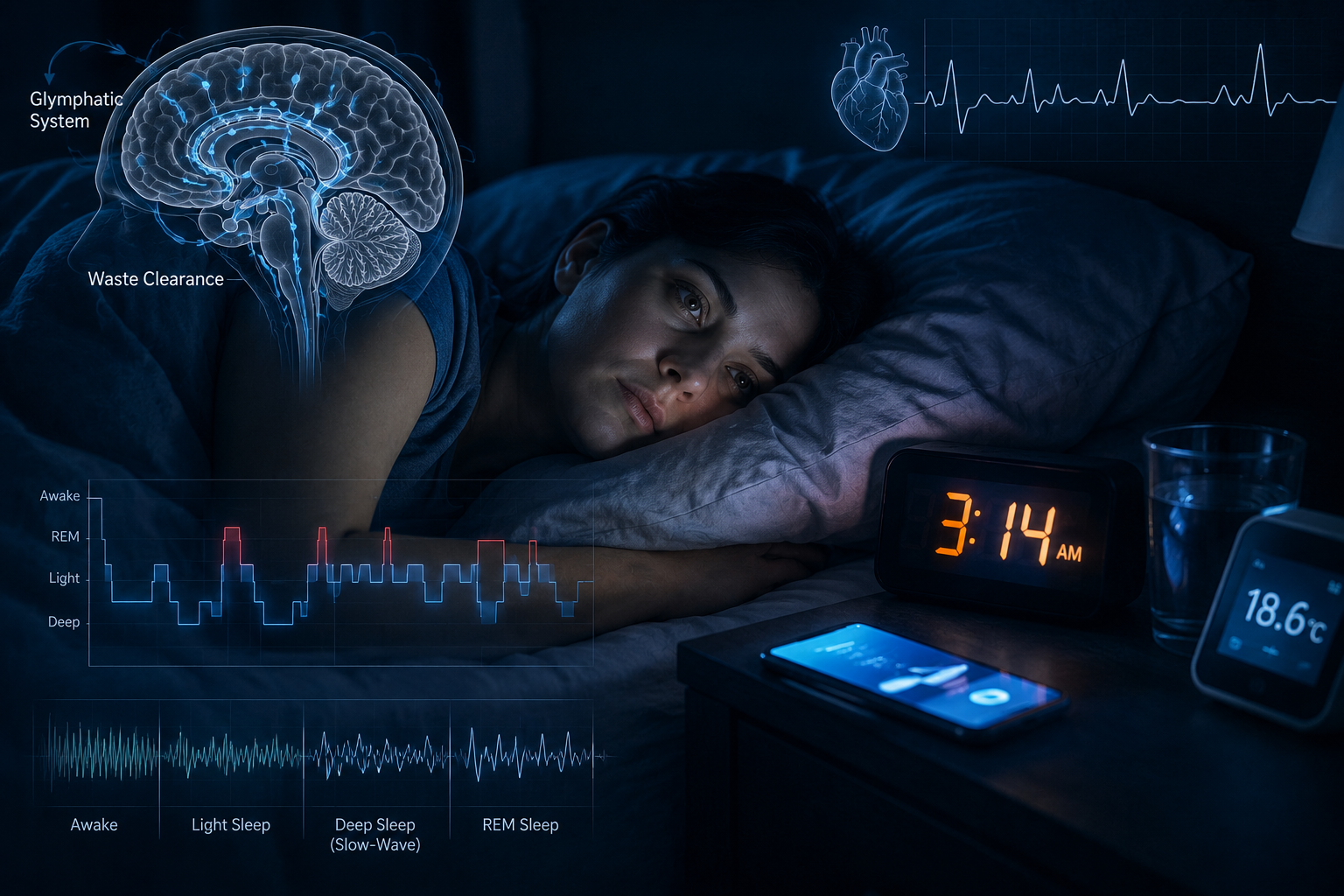
We've all had bad nights. But when poor sleep becomes routine, it stops being an inconvenience and starts becoming a health risk — one that touches nearly every system in your body.
How much sleep do adults actually need?
Most adults require between 7 and 9 hours of quality sleep per night. Quality matters as much as quantity — sleep cycles through distinct stages, including deep slow-wave sleep and REM (rapid eye movement) sleep, each serving critical restorative functions. Cutting sleep short or experiencing frequent disruptions can deprive you of the most beneficial stages even if total time in bed seems adequate.
Despite this, studies consistently show that one in three adults does not get enough sleep on a regular basis — a trend increasingly linked to modern work schedules, screen exposure, and chronic stress.
[Did you know? Your brain uses sleep to physically clear waste products — including beta-amyloid, a protein associated with Alzheimer's disease — through a system called the glymphatic system. This waste-clearance process is nearly ten times more active during sleep than during waking hours.]
The health consequences of chronic sleep deprivation
Occasional poor sleep leaves you fatigued. Chronic sleep deprivation, however, produces far more serious effects that accumulate gradually and often go unattributed to sleep.
What insufficient sleep does to your body over time
- Immune system — reduced production of cytokines and antibodies, making you more susceptible to infection
- Metabolism — disrupted hormone regulation (including insulin and cortisol) raises the risk of type 2 diabetes and weight gain
- Heart — consistently sleeping under 6 hours is associated with a significantly higher risk of hypertension and cardiovascular disease
- Mental health — sleep deprivation is both a symptom and a driver of depression and anxiety, creating a difficult cycle
- Cognitive function — impaired memory consolidation, slower reaction time, and reduced ability to concentrate
Common causes of poor sleep patients should recognize
Not all sleep problems stem from lifestyle choices. Obstructive sleep apnea — where the airway partially collapses during sleep, causing repeated micro-arousals — affects millions of people who may not realize they have it. Key signs include loud snoring, waking unrefreshed, and excessive daytime sleepiness. If these sound familiar, discussing a sleep study with your doctor is worthwhile.
Other contributors include restless legs syndrome, chronic pain, medication side effects, and irregular work schedules that disrupt the body's natural circadian rhythm.
[Health trivia. Exposure to blue light from screens suppresses melatonin production — the hormone that signals to your body that it's time to sleep. Research suggests even two hours of evening screen exposure can delay melatonin onset by up to 1.5 hours, pushing back your natural sleep window.]
Practical tips for better sleep
Evidence-based sleep hygiene practices
- Keep a consistent sleep and wake time — even on weekends — to anchor your circadian rhythm
- Avoid screens for at least 30–60 minutes before bed; use night mode or blue-light glasses if needed
- Keep your bedroom cool (around 18–20°C / 65–68°F), dark, and quiet
- Avoid caffeine after 2 PM — its half-life is approximately 5–7 hours, meaning half remains in your system at bedtime
- If you cannot sleep after 20 minutes, get up and do something calming until you feel sleepy — lying awake in bed trains your brain to associate bed with wakefulness
- Discuss persistent sleep difficulties with your doctor — cognitive behavioral therapy for insomnia (CBT-I) is considered the most effective long-term treatment for chronic insomnia
Sleep is not a luxury. It is a biological necessity — one that deserves the same attention and intention you give to diet and exercise. If sleep has been an afterthought, it may be time to make it a priority.