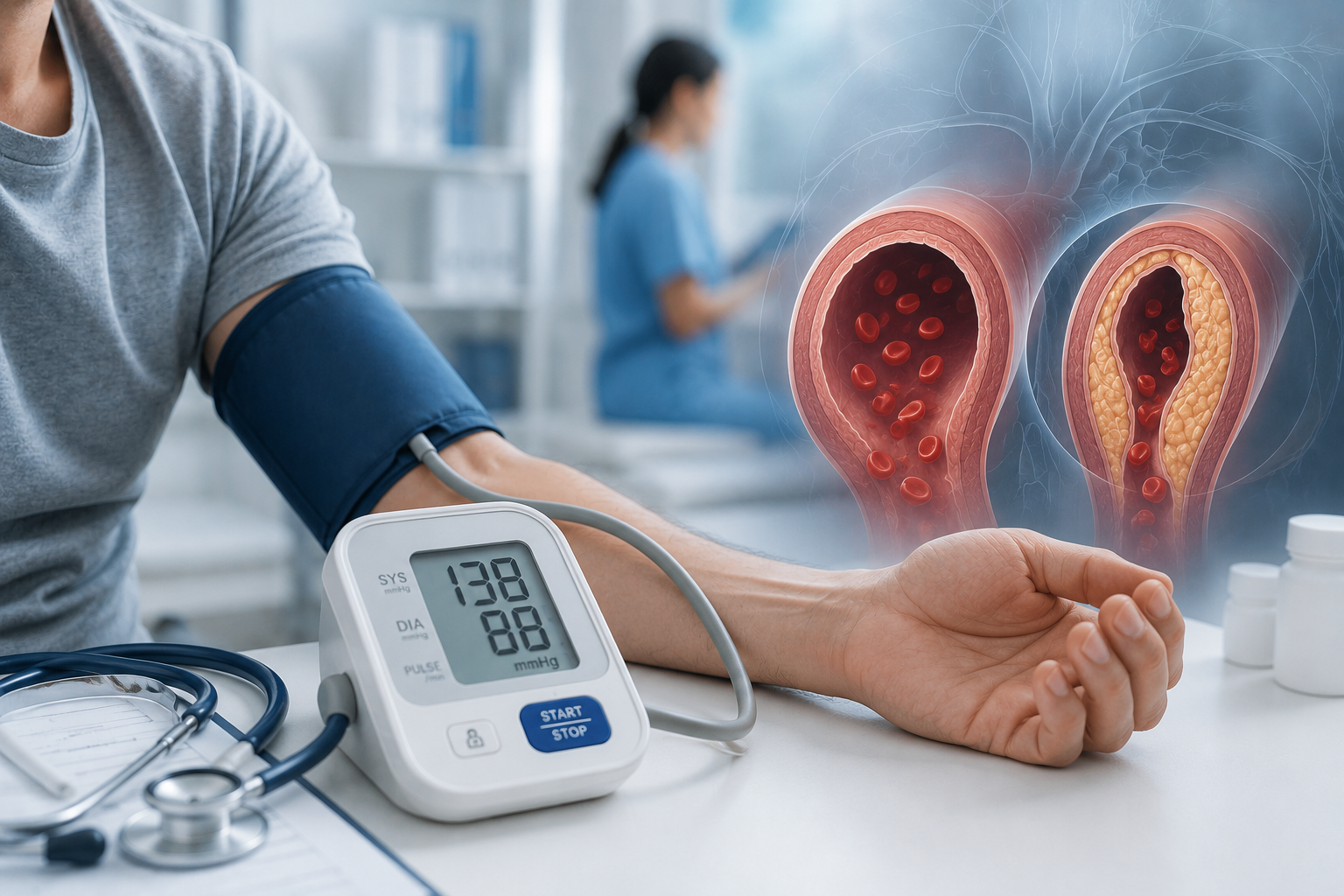
Hypertension rarely announces itself with obvious symptoms — which is exactly what makes it one of the most dangerous and underestimated conditions adults face today. Here's what every patient should know.
What is high blood pressure, exactly?
Blood pressure is the force your blood exerts against the walls of your arteries as your heart pumps it around your body. It's recorded as two numbers: systolic pressure (the force when your heart beats) over diastolic pressure (the force when your heart rests between beats). A healthy reading sits below 120/80 mmHg.
Hypertension is generally diagnosed when readings consistently reach 130/80 mmHg or above. Because the condition causes no pain or visible symptoms in its early stages, many people live with it for years without ever knowing.
[Did you know? Hypertension is often called the "silent killer" because most people have no symptoms at all — even when blood pressure reaches dangerously high levels. Globally, it affects around 1.28 billion adults aged 30–79, yet nearly half of those affected are unaware of their condition.]
Why it matters beyond your heart
Many patients assume high blood pressure is purely a heart problem. In reality, persistently elevated pressure damages blood vessels throughout the entire body, affecting multiple organs over time.
Organs affected by unmanaged hypertension
- Heart — increased risk of heart attack, heart failure, and enlarged heart muscle
- Brain — higher likelihood of stroke and, over time, cognitive decline and vascular dementia
- Kidneys — damaged filtration vessels can lead to chronic kidney disease
- Eyes — hypertensive retinopathy can cause vision changes or even blindness
- Arteries — walls thicken and harden (atherosclerosis), reducing blood flow throughout the body
Risk factors patients often overlook
While genetics and age play a role, many contributing factors are within your control. Diets high in sodium, physical inactivity, excessive alcohol intake, chronic stress, and being overweight all significantly raise your risk. Certain medications — including some oral contraceptives, decongestants, and non-steroidal anti-inflammatory drugs (NSAIDs) — can also elevate blood pressure.
[Health trivia. Measuring your blood pressure at the same time each day and taking two readings per session (averaging both) gives a more accurate picture than a single clinic reading. "White coat hypertension" — where anxiety about being at a clinic temporarily raises your reading — affects up to 20% of patients diagnosed with high blood pressure.]
Practical tips for patients
Evidence-informed lifestyle adjustments
- Reduce sodium intake to under 2,300 mg per day — read labels carefully, as processed foods are the primary source
- Follow the DASH diet (Dietary Approaches to Stop Hypertension): rich in fruits, vegetables, whole grains, and low-fat dairy
- Engage in at least 150 minutes of moderate aerobic exercise per week — even brisk walking counts
- Limit alcohol to no more than one standard drink per day for women, two for men
- Monitor your blood pressure regularly at home and keep a log to share with your doctor
- If prescribed medication, take it consistently — never stop without consulting your physician
High blood pressure is highly manageable when caught early. Regular check-ups and honest conversations with your healthcare provider are your most powerful tools. A reading takes less than a minute — make sure yours gets taken.