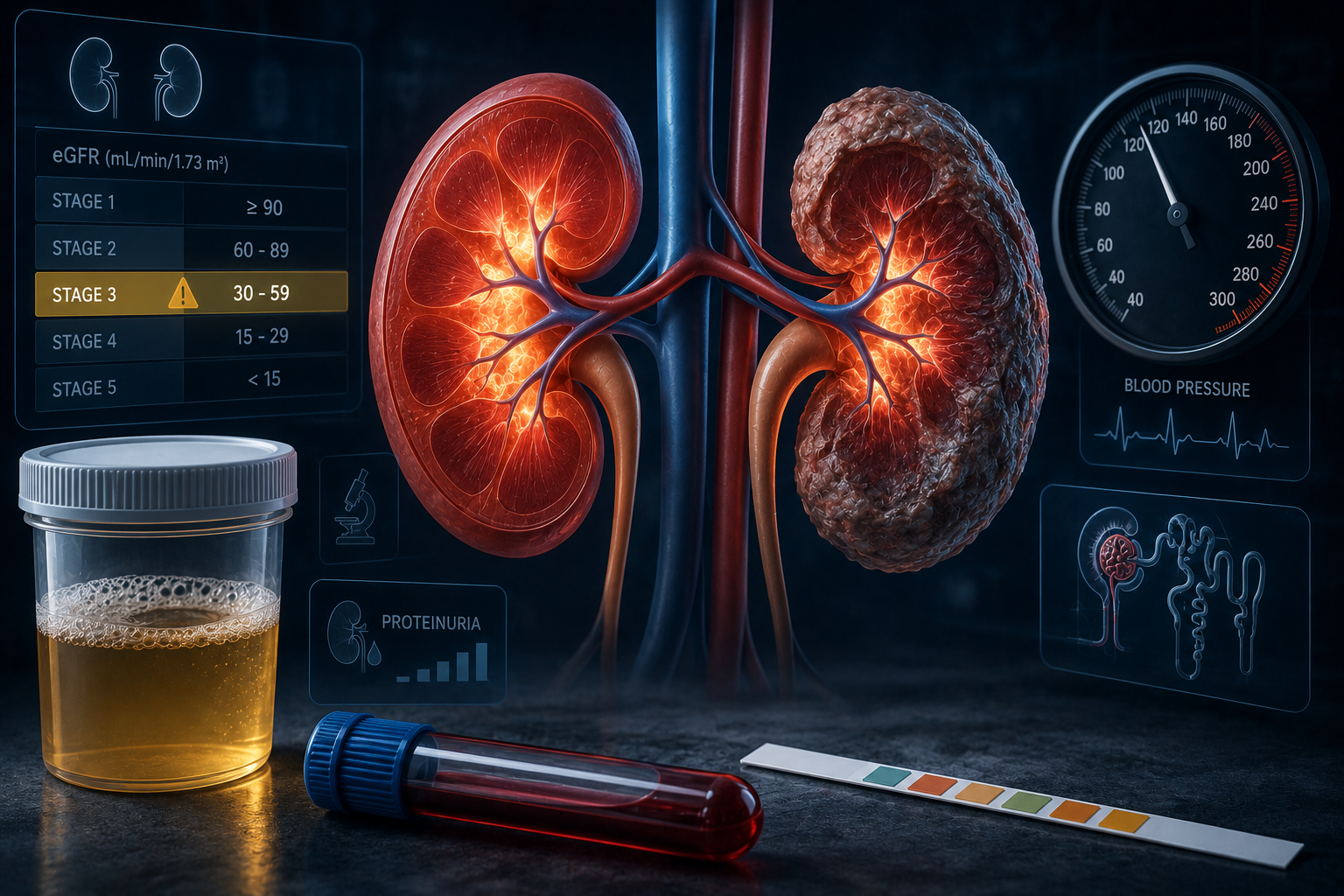
Chronic kidney disease progresses quietly for years — often without a single noticeable symptom until significant damage has already occurred. Understanding how your kidneys work, and what threatens them, is one of the most important things you chealth.an do for your long-term
What do the kidneys actually do?
Most people know the kidneys filter waste from the blood — but their role is far more expansive than that. Your two kidneys, each roughly the size of a fist, process about 200 liters of blood every day. In doing so, they regulate fluid and electrolyte balance, control blood pressure through hormone production, stimulate red blood cell creation, and activate vitamin D for bone health.
Chronic kidney disease (CKD) occurs when the kidneys sustain damage over time and gradually lose their ability to perform these functions. It is defined by the presence of kidney damage or reduced kidney function — measured by glomerular filtration rate (GFR) — lasting for three months or more.
[Did you know? The kidneys are remarkably resilient — you can lose up to 75% of kidney function before experiencing any noticeable symptoms. This is why CKD is often called a "silent disease" and why routine blood and urine tests are the only reliable way to detect it early.]
Who is most at risk?
While CKD can affect anyone, certain conditions significantly raise the risk. Diabetes is the leading cause of CKD worldwide, responsible for roughly 40% of cases. High blood pressure is the second most common cause, as sustained elevated pressure damages the delicate blood vessels within the kidneys over time.
Other risk factors include a family history of kidney disease, obesity, smoking, age over 60, and a history of acute kidney injury. People of certain ethnic backgrounds — including those of South Asian, African, and Indigenous heritage — also face a disproportionately higher risk.
Warning signs patients often dismiss
- Persistent fatigue or difficulty concentrating — the result of toxin buildup and anemia from reduced erythropoietin production
- Foamy or frothy urine — a sign of protein leaking into the urine (proteinuria), one of the earliest markers of kidney damage
- Swelling in the ankles, feet, or around the eyes — due to fluid retention as filtration declines
- Changes in urination frequency, particularly at night (nocturia)
- Persistent itching — caused by phosphate buildup in the blood when kidneys can no longer excrete it efficiently
- Loss of appetite or a metallic taste in the mouth — signs of advancing uremia
How CKD is staged and why it matters
CKD is classified into five stages based on eGFR (estimated glomerular filtration rate), which reflects how well the kidneys are filtering the blood. A healthy eGFR is above 90. Stage 1 and 2 represent mild damage with near-normal function; Stage 3 indicates moderate reduction; Stages 4 and 5 signal severe decline, with Stage 5 representing kidney failure requiring dialysis or transplant.
This staging matters enormously for treatment decisions. At early stages, lifestyle changes and medication can significantly slow or even halt progression. The window of opportunity is real — but it requires early detection.
[Health trivia! Over 800 million people worldwide are estimated to have chronic kidney disease — more than diabetes and cancer combined. Yet awareness remains critically low: studies suggest fewer than 10% of people with CKD know they have it, largely because routine screenings for kidney function are not yet universally integrated into standard health check-ups.]
Practical steps patients can take
Evidence-based actions to protect your kidneys
- Control blood sugar and blood pressure — these are the two most powerful modifiable factors in CKD progression
- Stay well hydrated with water; limit high-sodium foods, which stress the kidneys and raise blood pressure
- Avoid excessive use of non-steroidal anti-inflammatory drugs (NSAIDs) like ibuprofen — even short-term overuse can damage kidney tissue
- Do not smoke — smoking reduces blood flow to the kidneys and accelerates CKD progression
- Ask your doctor for an annual kidney function check (eGFR and urine albumin-to-creatinine ratio) if you have diabetes, hypertension, or a family history of kidney disease
- If on medication for blood pressure, a class called ACE inhibitors or ARBs is particularly protective of kidney function — discuss this with your physician
Your kidneys work silently every second of every day. They ask very little of you — but when they need attention, the time to act is long before the symptoms arrive. A simple blood test could tell you everything you need to know.