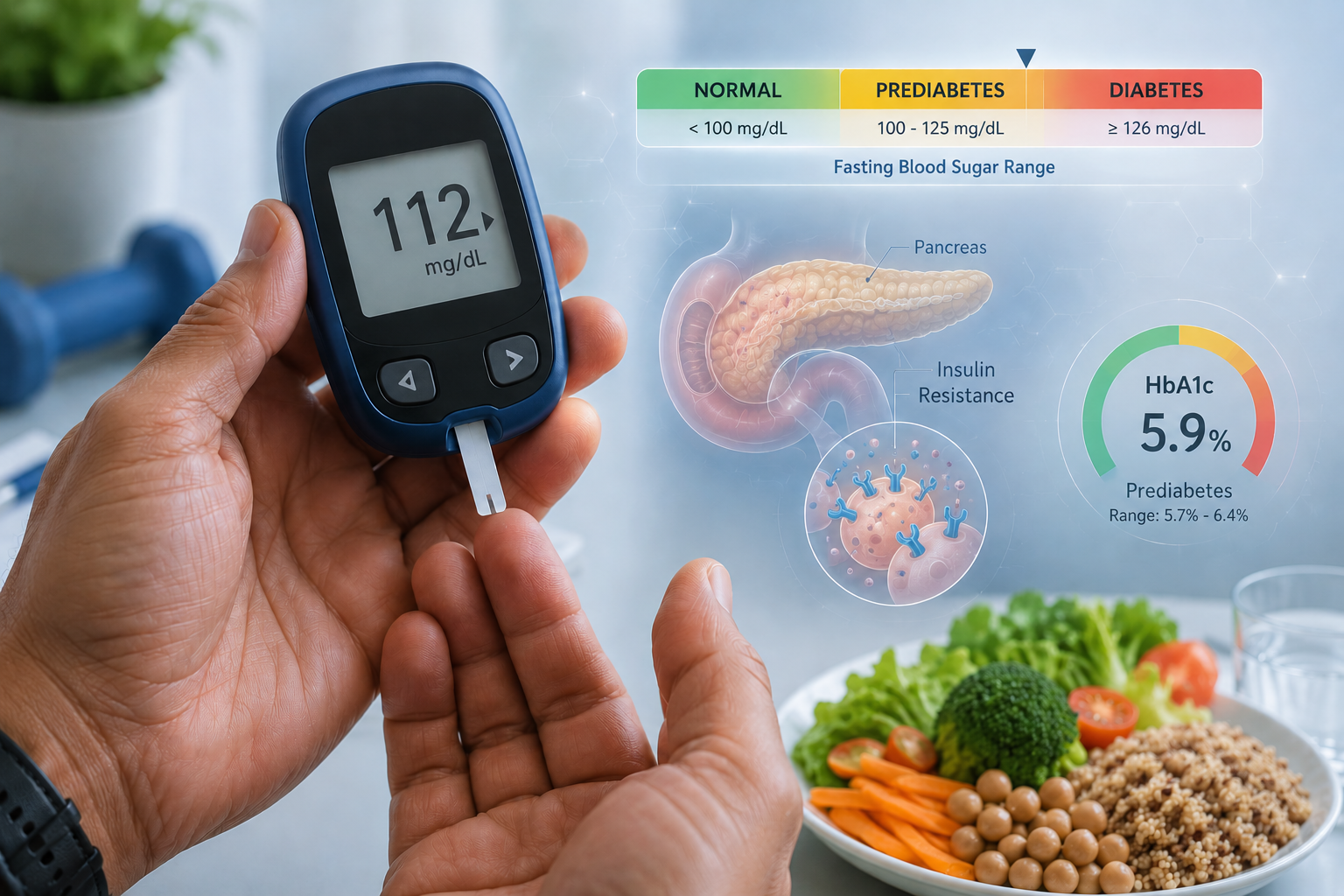
Before type 2 diabetes develops, the body often sends a warning — a condition called prediabetes. The good news: it is reversible. The challenge: most people who have it don't know.
What is prediabetes?
Prediabetes means your blood sugar levels are higher than normal, but not yet high enough to be classified as type 2 diabetes. It occurs when your body begins to struggle with using insulin effectively — a problem known as insulin resistance. Over time, the pancreas compensates by producing more insulin, but eventually cannot keep up, and blood sugar rises further.
Fasting blood glucose between 100–125 mg/dL (5.6–6.9 mmol/L), or an HbA1c level between 5.7% and 6.4%, typically indicates prediabetes. Without lifestyle changes, prediabetes progresses to type 2 diabetes in many patients within 5 years.
[Did you know? An estimated 374 million people worldwide have prediabetes — and approximately 80% of them are unaware of it. Because it produces no obvious symptoms, it is often only detected through routine blood tests, which is one reason regular health screenings are so important.]
Warning signs and risk factors
Prediabetes itself rarely causes noticeable symptoms, but certain physical signs and lifestyle factors raise your risk significantly. Being aware of them can prompt earlier testing and intervention.
Risk factors and early warning signs to know
- Excess weight — particularly abdominal fat, which is strongly linked to insulin resistance
- Physical inactivity — sedentary lifestyles reduce the body's ability to use glucose efficiently
- Family history of type 2 diabetes in a first-degree relative
- History of gestational diabetes during pregnancy
- Age over 45, though younger adults with risk factors should also be screened
- Acanthosis nigricans — darkened, velvety patches of skin around the neck or armpits, a visible sign of insulin resistance
- Polycystic ovary syndrome (PCOS), which is closely associated with insulin resistance
Why acting early makes all the difference
What makes prediabetes particularly significant as a diagnosis is the clear window of opportunity it represents. Unlike many conditions where damage is already done by the time of diagnosis, prediabetes can be reversed — and in many cases, type 2 diabetes can be prevented entirely — through targeted lifestyle changes.
The landmark Diabetes Prevention Program study found that participants who made moderate lifestyle changes — including losing 5–7% of their body weight and engaging in 150 minutes of physical activity per week — reduced their risk of progressing to type 2 diabetes by 58%.
[Health trivia. The order in which you eat your food during a meal can affect how quickly your blood sugar rises. Research shows that eating vegetables and protein before carbohydrates — rather than all at once — can reduce post-meal blood sugar spikes by up to 37%.]
Practical steps patients can take now
Evidence-based actions to lower blood sugar and reverse prediabetes
- Prioritize whole, fiber-rich carbohydrates (vegetables, legumes, whole grains) over refined carbs and added sugars
- Aim for at least 150 minutes of moderate activity weekly — walking after meals is particularly effective at blunting blood sugar spikes
- Lose 5–10% of your body weight if you are overweight — even modest weight loss significantly improves insulin sensitivity
- Reduce portion sizes of high-glycemic foods; eat slowly and mindfully
- Get adequate sleep — poor sleep independently raises blood sugar and worsens insulin resistance
- Ask your doctor about an HbA1c or fasting glucose test if you have risk factors — early detection is key
A prediabetes diagnosis is not a sentence — it is an invitation to act. The body is asking for change, and the evidence shows clearly that change works. Talk to your healthcare provider about what a personalized prevention plan might look like for you.