Understanding Stress and Its Impact
Stress is a natural response to life's demands, but chronic stress can have detrimental effects on our health. It is crucial to recognize the signs of stress and understand its impact on both physical and mental well-being.
Identifying Sources of Stress
To effectively manage stress, it's important to identify its sources. Common stressors include work pressures, family responsibilities, financial concerns, and health issues. By pinpointing these areas, you can develop targeted strategies to cope.
Effective Stress Management Techniques
Mindfulness and Meditation
Incorporating mindfulness and meditation into your daily routine can significantly reduce stress levels. These practices help center your mind and promote relaxation.
Physical Exercise
Regular physical activity is a powerful stress reliever. Exercise releases endorphins, which improve mood and reduce stress hormones.
Time Management
Efficient time management can minimize stress by ensuring that you have enough time for work, family, and leisure activities. Prioritize tasks and set realistic goals.
Healthy Lifestyle Choices
Maintaining a balanced diet, getting adequate sleep, and avoiding excessive caffeine and alcohol can help manage stress levels.
Building a Support System
Having a strong support system is vital for stress management. Reach out to friends, family, or support groups for encouragement and advice.
Seeking Professional Help
If stress becomes overwhelming, consider seeking professional help. Therapists and counselors can provide valuable tools and strategies for coping with stress.
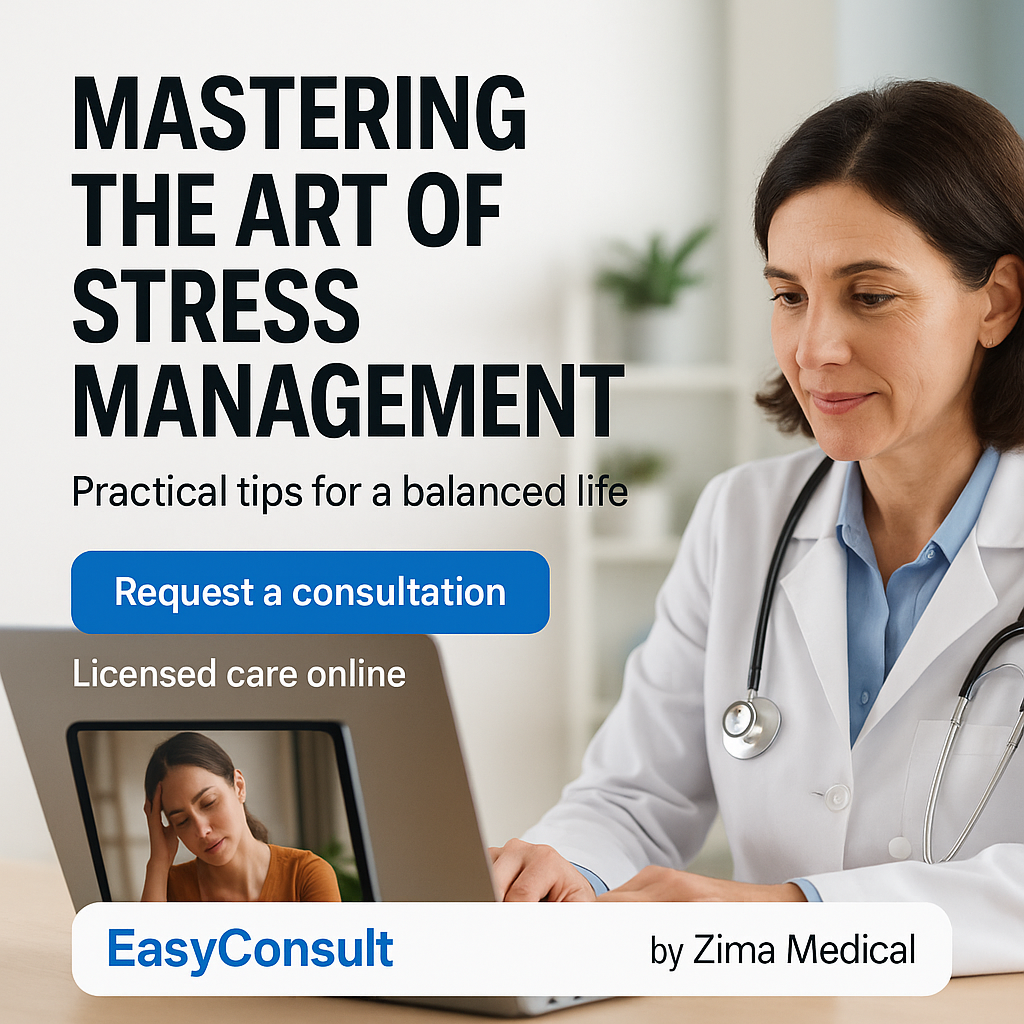
Request your consultation or medication refill today with EasyConsult