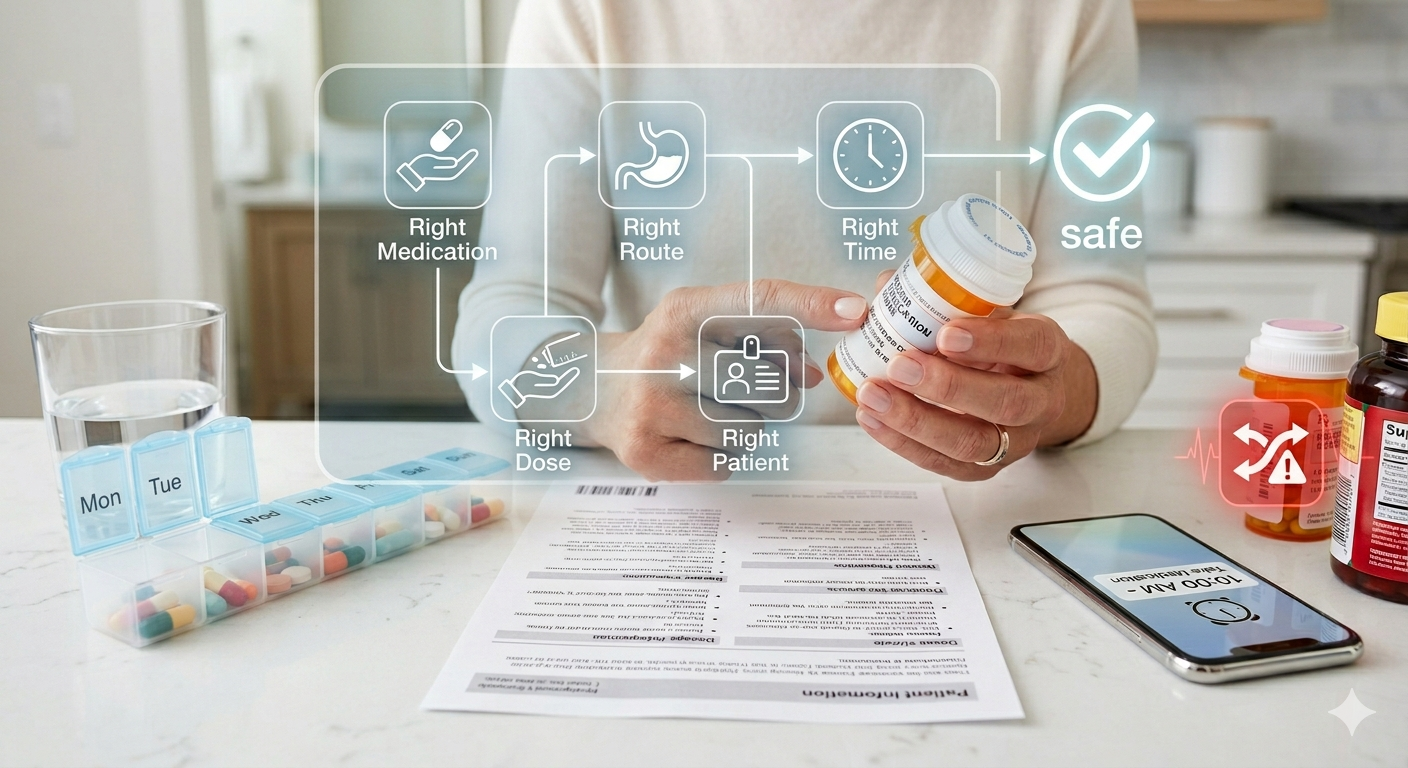
Medication errors are among the most common — and most preventable — causes of harm in healthcare. Many happen not in hospitals, but at home. This guide walks you through how to take your medications correctly, safely, and with full understanding.
Why It Matters
Medication errors are common
Studies estimate that medication errors affect 1 in 30 hospital patients globally — and a significant proportion occur at home due to misunderstanding instructions.
Timing affects how drugs work
Some medications are less effective or cause side effects when taken at the wrong time of day, with food, or alongside other drugs.
Stopping early is risky
Stopping a prescribed course prematurely — especially antibiotics — can worsen your condition, cause relapse, or contribute to drug resistance.
Step-by-step guide
1 — Read the label and patient information leaflet fully
Before taking any new medication, read the full label and the accompanying leaflet. Note the dosage, frequency, whether it should be taken with food or water, storage requirements, and any listed side effects or interactions. Patients who read leaflets are measurably more likely to take medications correctly.
2 — Confirm the "5 Rights" before each dose
Borrow from nursing practice: confirm you have the right medication, the right dose, the right route (oral, topical, inhaled), at the right time, and that it is intended for you. This simple habit catches mix-ups before they happen — particularly important in households with multiple people taking different medications.
3 — Take at consistent times each day
Many medications — particularly those for blood pressure, thyroid, diabetes, and mental health — work best when taken at the same time every day. Consistent timing maintains stable levels in your bloodstream. Set a phone alarm, link it to an existing routine (morning coffee, brushing teeth), or use a pill organizer to stay on track.
4 — Never skip or double-dose without guidance
If you miss a dose, check the leaflet for instructions — advice varies significantly by medication. For some drugs, taking a missed dose as soon as you remember is fine; for others (particularly blood thinners or insulin), doubling up can be dangerous. When in doubt, contact your pharmacist before taking action.
5 — Tell all your healthcare providers about every medication you take
This includes over-the-counter drugs, vitamins, herbal remedies, and supplements. Some interactions are serious — St John's Wort, for example, reduces the effectiveness of contraceptive pills, anticoagulants, and HIV medications. Your pharmacist is one of the most accessible and underused resources for checking interactions
6 — Store medications correctly
Most medications should be stored in a cool, dry place — not in bathrooms, which are humid, or car gloveboxes, which can overheat. Some require refrigeration. Always check the label. Keep medications in their original packaging with the expiry date visible, and safely dispose of unused or expired medication through a pharmacy take-back program.
REMINDER: Never share prescription medications with another person, even if their symptoms seem identical. Dosing, underlying conditions, and drug interactions differ per individual. What is safe for one person may be harmful — or even fatal — for another.
Common myths vs. facts
Myth
"I feel better, so I can stop my antibiotics early."
Fact
Incomplete antibiotic courses allow resistant bacteria to survive and multiply. Always complete the full course as prescribed.
Myth
"Natural supplements are always safe to take with medication."
Fact
Many herbal supplements interact with prescription drugs. Always inform your doctor or pharmacist before starting any supplement.
Myth
"Taking a higher dose will make me recover faster."
Fact
Exceeding prescribed doses rarely speeds recovery and can cause serious harm. Dosing is calculated based on your weight, kidney function, and medical history.