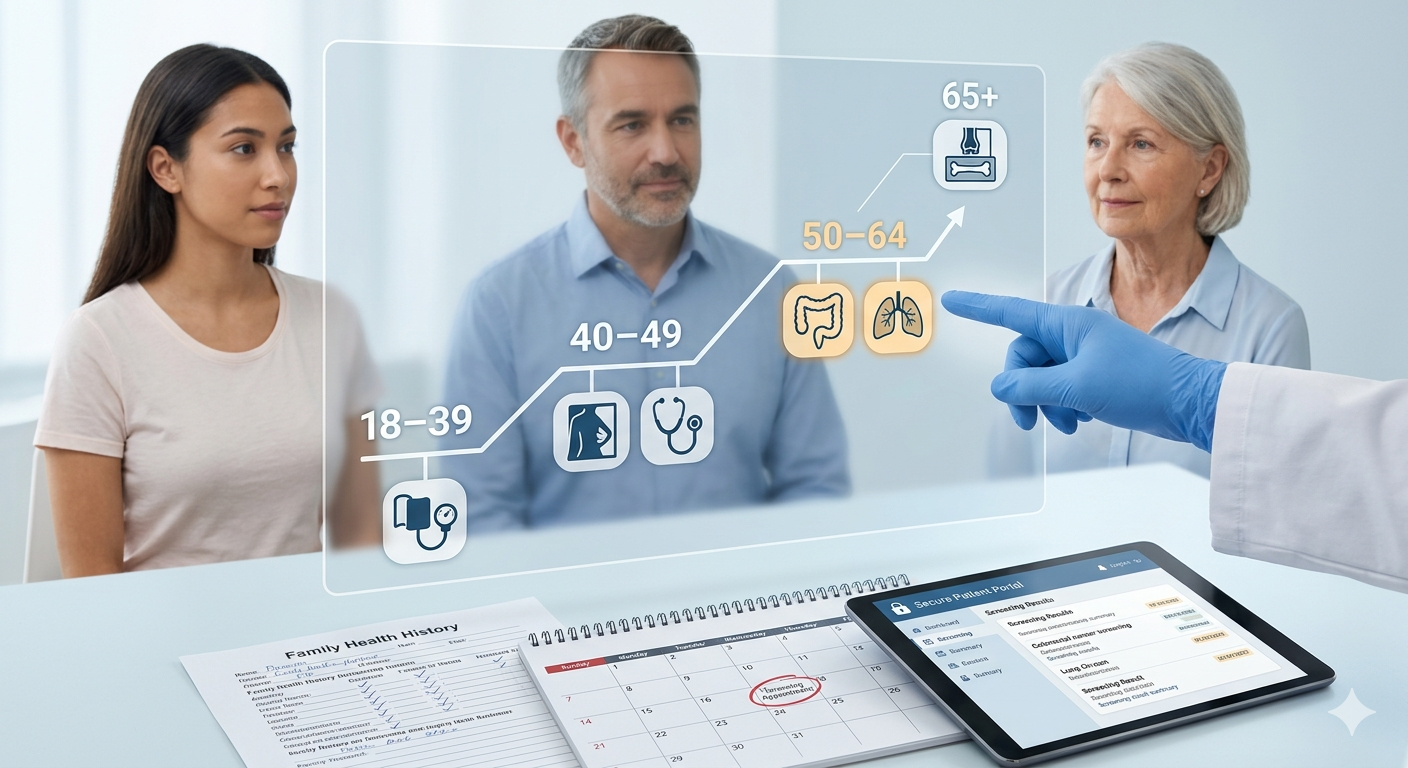
A health screening is not the same as a check-up. It looks for disease before you have symptoms — when treatment is most effective and outcomes are best. Knowing which screenings apply to you, and when, is one of the most concrete steps you can take toward long-term health.
What is a health screening?
Screening vs. diagnostic testing
A screening test is performed on people with no symptoms to identify those who may be at higher risk of a condition. A diagnostic test is done when symptoms are already present. Screenings don't diagnose — they identify who needs further investigation. A positive screening result means more tests are needed, not that disease is confirmed.
Why early detection changes outcomes
Many serious conditions — including colorectal cancer, cervical cancer, hypertension, and type 2 diabetes — are far more treatable when caught before symptoms develop. Cervical cancer, for example, is almost entirely preventable through regular screening and vaccination. The earlier the detection, the wider the range of treatment options and the better the prognosis.
Screening Timeline by Age
⤷ Ages 18–39
Establish your baseline
This is the time to establish baseline blood pressure, cholesterol, blood glucose, and BMI readings. Cervical cancer screening (Pap smear or HPV test) should begin at age 21 for women. Sexually transmitted infection screening is recommended for all sexually active adults. Skin checks are advisable for those with significant sun exposure history.
Blood pressure | Cholesterol | Cervical screening | STI screening
⤷ Ages 40–49
Increase monitoring frequency
Annual blood pressure and glucose checks become more important as metabolic risk rises. Discuss the timing of mammogram screening with your doctor — recommendations vary by guideline and personal risk. Diabetes screening is recommended for adults with overweight or other risk factors.
Glucose / HbA1c | Mammogram (discuss) | Lipid panel
⤷ Ages 50–64
Expand your screening scope
Colorectal cancer screening becomes a priority at 50 (or earlier for those with family history). Lung cancer screening via low-dose CT is recommended for adults aged 50–80 with a significant smoking history. Bone density (DEXA) screening is recommended for women at risk of osteoporosis. Eye pressure checks for glaucoma are also advised.
Colorectal cancer | Lung CT (if smoker) | Bone density | Eye pressure
⤷ Ages 65+
Comprehensive annual review
All previous screenings continue at appropriate intervals. Abdominal aortic aneurysm (AAA) ultrasound is recommended once for men aged 65–75 who have ever smoked. Hearing and vision assessments become routine. Review all medications annually with your doctor for ongoing necessity and interactions.
AAA ultrasound | Hearing & vision | Medication review
Key facts patients should know about screenings
-
False positives exist
A positive result is not a diagnosis — follow-up testing is always needed before conclusions are drawn.
-
Risk factors change your schedule
Family history, lifestyle, and ethnicity may mean you need earlier or more frequent screenings than general guidelines suggest.
-
Screenings aren't one-size-fits-all
Your doctor tailors recommendations to your personal risk profile — generic timelines are starting points, not fixed rules.
-
Insurance & access vary
Many preventive screenings are covered by insurance or available for free through public health programs — ask your provider what's available to you.
How to approach your screening conversation
Step 1 — Know your family history
Before your appointment, write down any first-degree relatives who were diagnosed with cancer, heart disease, diabetes, or other significant conditions, and at what age. This single piece of information can change your entire screening schedule.
Step 2 — Ask specifically which screenings are due
At your next annual check-up, ask your doctor directly: "Given my age, sex, and history, which screenings am I due for this year?" Don't assume screenings will be offered automatically — healthcare systems vary, and proactive patients get more complete care.
Step 3 — Schedule and track your results
Don't leave the clinic without a date on the calendar for any recommended screening. Keep a personal health log — either in a notebook or your patient portal — recording what was screened, when, and the result. This longitudinal record is invaluable for detecting trends over years.